HowToDoAffiliateMarketing.com

You’re Not Failing At Affiliate Marketing. You’re Learning It The Wrong Way.

Most beginners do not fail at affiliate marketing because affiliate marketing does not work.

Affiliate marketing works.

People are earning commissions every day from blogs, paid ads, YouTube channels, email lists, TikTok pages, Facebook pages, SEO, newsletters, review sites, comparison pages, funnels, native ads, push ads, pop traffic, and traffic sources most beginners have never even heard of.

The business model is not the problem.

The problem is the way most beginners try to learn it.

They learn from scattered fragments.

A YouTube video here.

A Twitter thread there.

A Reddit comment from someone who may or may not know what he is talking about.

A Facebook group post telling them to “just pick a niche and post content.”

A free PDF written mostly to collect their email address.

A course that sounds clear while they are watching it, but becomes confusing the moment they try to apply it.

One person says paid ads are the fastest way.

Another says paid ads are too risky.

One person says SEO is the only real path.

Another says SEO takes too long.

One person says promote Amazon products.

Another says Amazon commissions are too low.

One marketer says SaaS is best.

Another says finance.

Another says sweepstakes, casino, nutra, crypto, dating, insurance, lead generation, or whatever vertical happens to sound exciting this month.

So the beginner keeps consuming.

More videos.

More guides.

More screenshots.

More income reports.

More tactics.

More opinions.

More “complete beginner” tutorials.

And after all of that, they still do not know what to actually do next.

That is where the real damage begins.

Affiliate marketing looks simple from the outside.

You find an offer.

You promote it.

Someone clicks.

Someone buys, signs up, deposits, subscribes, downloads, or completes an action.

You get paid.

Simple.

But when you actually try to do it, you realize there are a hundred decisions hiding behind that simple explanation.

Which niche should you choose?

Which offer should you promote?

Should you build a website or use a landing page?

Should you write articles or run ads?

Should you direct link or build a bridge page?

Should you collect emails?

Should you use a tracker?

Should you test one offer or several?

Should you focus on SEO, paid traffic, social media, email, YouTube, communities, or something else entirely?

Should you chase commissions, recurring revenue, CPA payouts, revenue share, or lead generation?

Should you follow beginner advice or advanced advice?

And worse, how do you know if the advice you are following is still current?

That is the part most beginners underestimate.

Affiliate marketing is not just about information. It is about context.

A tactic that worked five years ago may not work today.

A campaign that works in one country may fail badly in another.

An offer that converts on one traffic source may perform terribly on another.

A landing page that works for one vertical may be completely wrong for another.

A strategy that works for someone with a large audience may not work for someone starting from zero.

A course can teach you the vocabulary of affiliate marketing and still leave you with no operating skill.

You may understand what a funnel is.

You may understand what an offer is.

You may understand what a tracker is.

You may understand what a landing page is.

You may understand what traffic is.

But understanding the terms is not the same as understanding the game.

That is why many beginners feel busy but not productive.

They are learning, but not progressing.

They are watching videos, but not building judgment.

They are buying courses, but not developing pattern recognition.

They are taking notes, but not making better decisions.

They are collecting tactics, but they do not have a framework.

Then, when they finally take action, they often take action in the most expensive way possible.

They pick an offer they do not understand.

They choose a traffic source because someone online said it was “working.”

They create a landing page based on what looks nice instead of what converts.

They launch a campaign without proper tracking.

They spend money without knowing what data to look at.

They panic too early.

Or they keep spending too long.

Then the campaign fails.

And because they do not understand why it failed, they blame the wrong thing.

They blame the offer.

They blame the traffic source.

They blame the ad network.

They blame the landing page.

They blame the niche.

They blame themselves.

But sometimes the problem was not the entire strategy.

Sometimes it was the angle.

Sometimes it was the copy.

Sometimes it was tracking.

Sometimes it was traffic quality.

Sometimes it was the offer.

Sometimes it was the wrong market.

Sometimes they killed the campaign too early.

Sometimes they kept it alive for too long.

Beginners cannot tell the difference because they are learning alone.

So they start again.

New course.

New niche.

New traffic source.

New tool.

New strategy.

New promise.

New hope.

Same confusion.

This is the cycle that quietly kills most beginners.

Not laziness.

Not lack of ambition.

Not lack of intelligence.

They fail because they are trying to learn a performance-based business from disconnected advice.

Affiliate marketing is not like reading a motivational book.

You cannot just consume information and expect results.

It is closer to learning sales, trading, copywriting, media buying, or entrepreneurship.

You need to see how decisions are made.

You need to understand why something worked.

You need to understand why something failed.

You need to know what matters and what is just noise.

You need to hear from people who are actually testing, not just people repeating theory.

Because in affiliate marketing, bad information is not harmless.

Bad information costs money.

It costs time.

It costs confidence.

And eventually, it makes smart people quit before they ever get a fair shot.

The dangerous part is that most beginners do not notice the damage while it is happening.

At first, it feels like progress.

You are watching videos.

You are reading guides.

You are joining groups.

You are learning new terms.

You are discovering traffic sources, affiliate networks, offers, funnels, trackers, landing pages, swipe files, email sequences, SEO strategies, paid ad methods, and different ways people make money online.

It feels exciting.

It feels like you are getting closer.

It feels like one more video, one more strategy, one more “complete guide” might finally make everything click.

But slowly, the opposite starts to happen.

The more you consume, the more confused you become.

You no longer have one clear path.

You have ten.

You start with SEO, then hear SEO takes too long.

So you look at paid ads.

Then someone says paid ads are too risky for beginners.

So you look at social media.

Then someone says social traffic does not convert.

So you look at email marketing.

Then you realize you need traffic before you can build an email list.

So you go back to SEO.

Then you see someone making money with TikTok.

Then another person says YouTube is better.

Then another says the real money is in high-ticket affiliate programs.

Then another says recurring SaaS commissions are better.

Then another says CPA offers are faster.

Then another says lead generation is the best model.

And suddenly, you are not building an affiliate marketing business anymore.

You are just spinning.

You keep changing direction before anything has enough time to work.

You keep comparing your beginning to someone else’s screenshot.

You keep wondering whether you picked the wrong niche, the wrong offer, the wrong traffic source, the wrong strategy, or the wrong mentor.

Every time you feel stuck, the internet gives you a new escape hatch.

A new course.

A new tool.

A new method.

A new keyword.

A new ad network.

A new promise that this one will finally be different.

That is how beginners get trapped.

Not by doing nothing.

But by doing too many disconnected things.

They build half a blog, then abandon it.

They set up a landing page, then never drive proper traffic to it.

They join an affiliate network, then get overwhelmed by the number of offers.

They run one small ad test, then kill it before there is enough data.

They write ten articles, then stop because traffic does not come fast enough.

They buy a course, then buy another before finishing the first.

They keep starting from zero, but they tell themselves they are gaining experience.

But deep down, they know the truth.

They are not getting clearer.

They are getting more scattered.

And scattered learning is expensive.

It does not always feel expensive at first because the first cost is not always money.

Sometimes the first cost is attention.

You lose your ability to focus on one path.

Then you lose your ability to judge which advice matters.

Then you lose your confidence.

Then you lose momentum.

Then, finally, you lose money.

You spend on hosting.

You spend on domains.

You spend on tools.

You spend on courses.

You spend on trackers.

You spend on ads.

You spend on templates.

You spend on software you barely understand.

You spend on things that feel like progress, but do not actually move you closer to commissions.

And when results do not come, the frustration builds.

You start asking the wrong questions.

Is affiliate marketing dead?

Is SEO dead?

Are paid ads too expensive?

Is this niche too competitive?

Do I need a better course?

Do I need a better tool?

Do I need to switch strategy again?

But often, the real question is much simpler.

Do I actually understand what I am doing?

That is the question most beginners avoid because the answer is uncomfortable.

They have consumed a lot of information, but they have not developed real operating judgment.

They know the vocabulary, but not the decision-making.

They know what a funnel is, but not why one funnel converts and another fails.

They know what an offer is, but not how to judge whether an offer is worth promoting.

They know what traffic is, but not how to understand traffic quality.

They know what tracking is, but not how to use data to make decisions.

They know what copywriting is, but not how to connect the reader’s pain to the offer.

They know what affiliate marketing is, but they do not yet understand how affiliates actually think.

That gap is where money disappears.

Because when you do not understand the game, every decision feels like a guess.

Choosing a niche becomes a guess.

Choosing an offer becomes a guess.

Choosing a traffic source becomes a guess.

Writing a landing page becomes a guess.

Setting a budget becomes a guess.

Killing or scaling a campaign becomes a guess.

And when every decision is a guess, your results become random.

Some beginners get lucky for a while.

Most do not.

Most keep paying tuition to the market.

They test without knowing what they are testing.

They fail without knowing why they failed.

They try again without fixing the actual problem.

Then they burn out.

Not because they are weak.

Because nobody can stay motivated forever when every step feels uncertain.

That is the quiet danger of learning affiliate marketing the wrong way.

It does not just drain your wallet.

It drains your belief.

At the beginning, you think, “I can do this.”

After a few failed attempts, you think, “Maybe I just need a better strategy.”

After a few more, you think, “Maybe other people can do this, but I cannot.”

That is the point where many beginners quit.

And the sad part is, many of them were not far from understanding it.

They were not stupid.

They were not lazy.

They were not incapable.

They were just surrounded by noise.

They were trying to learn from people who gave them fragments instead of context.

They were trying to make decisions without seeing how experienced affiliates think through the same problems.

They were trying to build confidence without feedback.

They were trying to learn a practical business without being close to practical conversations.

And that is a brutal way to learn.

Imagine trying to learn boxing by only watching random clips online.

You might learn some punches.

You might understand the basic theory.

But the moment you step into the ring, everything changes.

You realize you do not know how to react.

You do not know how to read the other person.

You do not know when to attack, when to defend, when to move, when to reset.

That is what affiliate marketing feels like for many beginners.

They understand the theory.

But the moment real money, real traffic, real offers, real data, and real decisions are involved, they freeze.

A failed campaign feels like proof they are not good enough.

A rejected affiliate application feels personal.

A landing page with no conversions feels like failure.

A traffic source that does not work feels like the whole business model is broken.

A confusing tracker setup feels like a sign that they are not technical enough.

But experienced affiliates do not see these things the same way.

They see them as data.

They see them as normal.

They see them as part of the process.

They know what to look at.

They know what to ignore.

They know when something is worth fixing and when it is better to move on.

That difference matters.

Because beginners often do not need more motivation.

They need interpretation.

They need context.

They need to see real discussions around real problems.

They need to know that the confusion they are feeling is not unique.

They need to understand that failed tests are normal, but blind testing is dangerous.

They need to stop treating affiliate marketing like a collection of hacks and start treating it like a skill-based business.

That is why the better way is not to buy more random information.

The better way is to put yourself closer to better conversations.

That is the shift most beginners miss.

They think they need the perfect course.

They think they need the perfect niche.

They think they need the perfect traffic source.

They think they need the perfect offer.

They think they need someone to hand them a step-by-step blueprint where every move is already decided for them.

But that is not how affiliate marketing really works.

Affiliate marketing changes too quickly for one fixed blueprint to solve everything.

Traffic sources change.

Offers change.

Payouts change.

Rules change.

Competition changes.

What worked six months ago may not work the same way today.

What works for one person may not work for you because your budget, skill level, country, traffic source, offer, angle, and execution are different.

That is why the real solution is not just more information.

The real solution is better context.

You need to learn how affiliates think.

You need to see how they choose offers.

You need to see how they judge traffic sources.

You need to see how they test landing pages.

You need to see how they read data.

You need to see how they talk through problems.

You need to see how they handle failed campaigns without panicking.

You need to see how they decide when to keep testing, when to optimize, and when to walk away.

That kind of learning rarely comes from a random free video.

It comes from being around people who are discussing the business in real time.

That is why a serious affiliate marketing community can be one of the smartest starting points for beginners who want to take this seriously.

Not because a community is magic.

It is not.

Joining a community will not automatically make you profitable.

It will not do the work for you.

It will not remove the need to test, write, build, track, analyze, and improve.

But a good community can give you something most beginners badly need.

Context.

Instead of learning from isolated pieces of advice, you get to study real conversations.

You get to see what other affiliates are asking.

You get to see what experienced people pay attention to.

You get to see which problems are common.

You get to see how different people approach traffic, offers, funnels, landing pages, networks, tracking, copy, and optimization.

And slowly, you start to understand the game at a deeper level.

You stop looking for a magic method.

You start looking for better decisions.

That is the real advantage.

Affiliate marketing rewards better decisions.

Not louder motivation.

Not more screenshots.

Not another unfinished course sitting in your inbox.

Better decisions.

Choosing a better offer.

Understanding a better angle.

Writing a better page.

Reading your numbers better.

Knowing when a campaign has potential.

Knowing when it does not.

Knowing what to ask before spending money.

Knowing what to check before blaming the offer.

Knowing how to think instead of blindly copying.

That is what the right community can help you develop.

It gives you a place to learn the language of the business.

It gives you a place to ask questions that are too specific for generic videos.

It gives you a place to observe how other people are solving the same problems you are facing.

It gives you a place to see what is being discussed by people who are actually in the arena.

And maybe most importantly, it gives you a place where affiliate marketing starts to feel less lonely.

Because learning this alone is hard.

You can sit at your desk for months trying to figure out why your page is not converting.

You can waste days wondering whether your traffic source is the problem.

You can keep second-guessing whether your offer is weak, your copy is weak, your targeting is weak, or your entire strategy is wrong.

But when you are inside the right community, you are no longer trapped inside your own head.

You can compare notes.

You can read discussions.

You can search old conversations.

You can learn from people who made the mistake before you.

You can see that many of the problems you thought were personal failures are normal parts of the learning curve.

That alone can save you months of confusion.

Again, this is not about avoiding work.

It is about making the work smarter.

You will still need to take action.

You will still need to test.

You will still need to build.

You will still need to learn copywriting, traffic, tracking, offers, angles, and conversion.

But instead of trying to piece everything together from scattered advice, you can learn in an environment where the conversations are more focused.

That is why I recommend taking a look at this community.

It is built for people who want to take affiliate marketing seriously.

You can explore first.

You can read.

You can observe.

You can see the kind of conversations happening inside.

And if you like what you see, you can decide whether upgrading your membership makes sense for you.

That matters.

Because this is not the same as blindly paying for another course and hoping it finally solves everything.

You are not being asked to believe another promise.

You are being asked to look at the environment and decide for yourself.

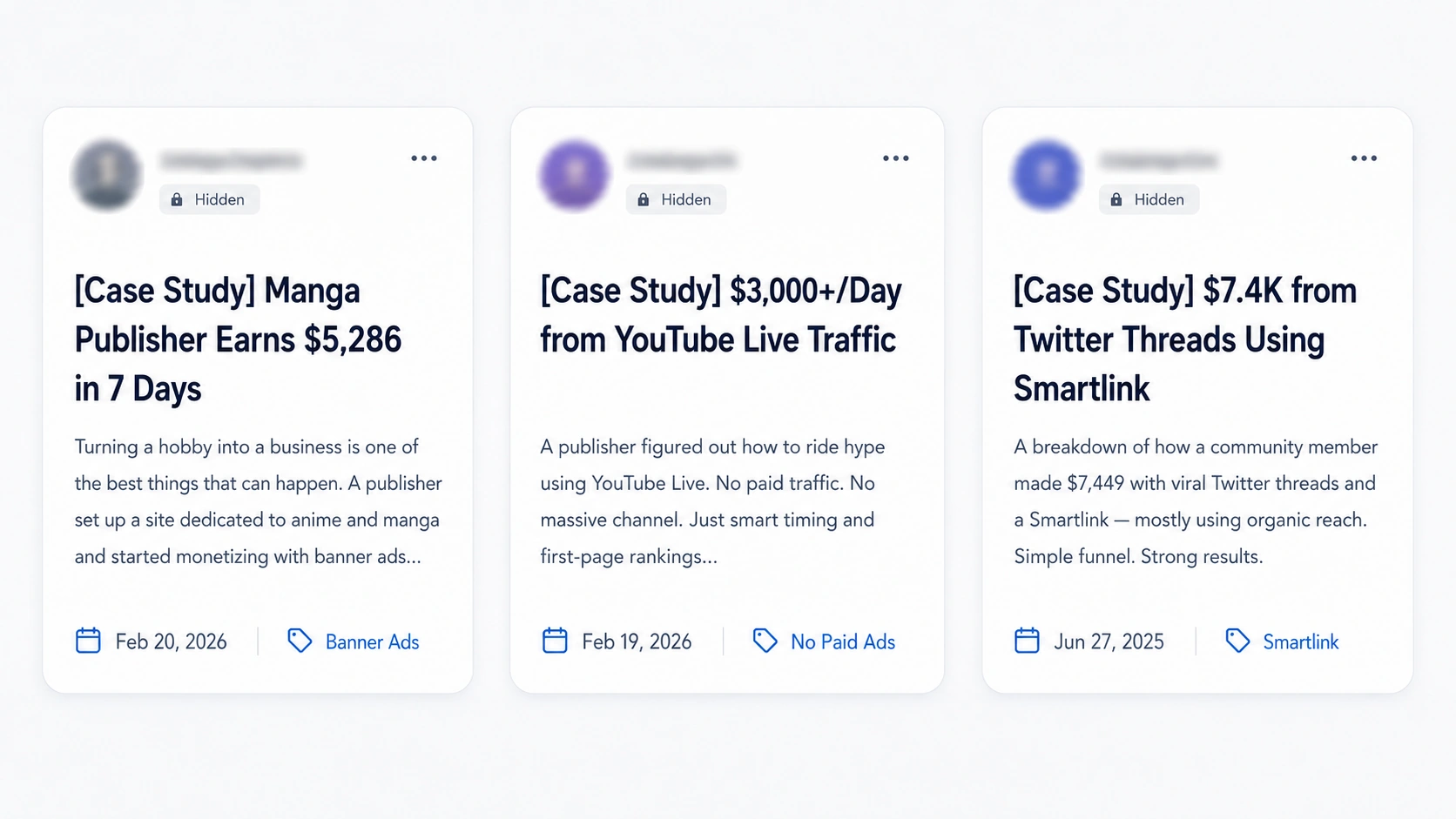
Inside, you can find discussions around affiliate campaigns, traffic sources, offers, landing pages, tracking, networks, optimization, and the practical problems beginners face once they stop watching videos and start taking action.

It is not for people looking for guaranteed income.

It is not for people who want someone to hand them a copy-and-paste campaign.

It is not for people who think paying for access means the work is done.

But if you are serious about affiliate marketing, and you are tired of learning from random fragments all over the internet, this may be one of the better places to start before spending more money on traffic, tools, or another course.

Because before you can make better money in affiliate marketing, you need to make better decisions.

And before you can make better decisions, you need better information.

Not more noise. Better information. Better context. Better conversations.

That is what the right community gives you.

So before you buy another course, chase another guru, switch strategy again, or spend more money testing campaigns without understanding what you are doing, do the smarter thing.

Go inside the community.

Look around.

Read the discussions.

Study how real affiliates think.

Then decide for yourself.

If you are serious about learning affiliate marketing properly, this is the best place to start.