Start with one offer, one traffic source and a budget you can afford to lose. Confirm the traffic is permitted, test the tracking and conversion path, then launch a small controlled experiment with a clear question and spending limit.
Your first campaign does not need a complicated funnel or a collection of expensive tools. It needs a clear offer, suitable visitors and enough measurement to explain what happened. The aim of the first test is to learn whether the setup and economics deserve further testing.
1. Choose one conversion goal
Decide what action earns a commission: an approved lead, a purchase, a subscription or another defined event. Read the offer terms rather than assuming every signup gets paid.
Write a short campaign brief containing the product, audience, allowed country and device, conversion event, payout, approval conditions and payment timing. If any of these are unclear, ask the programme or network before spending.
A high headline payout can hide a difficult conversion flow. Compare what the visitor must actually do and why they would want to do it.
2. Check that your traffic method is allowed
Confirm the offer accepts your intended source and placements. Look for restrictions on brand bidding, email, incentives, direct linking, social advertising and claims. Permission from an affiliate network does not replace the advertising platform’s own requirements.
Choose one source for the first test. Running several unfamiliar sources together makes it harder to distinguish a weak offer from unsuitable traffic or an implementation mistake.
For organic content, replace the ad budget with a defined publishing and distribution experiment. Measure useful visits and outbound clicks, but do not assume an article has failed because it produces no immediate search traffic.
3. Work backwards from the payout
Before setting a bid, estimate the revenue a paid click would need to generate. Use conservative assumptions and label them as assumptions.
Here is a hypothetical offer paying $20 for an approved conversion. If 1% of paid clicks become approved conversions, the expected revenue per paid click is $0.20. At a $0.25 CPC, those assumptions imply a loss before software fees.
This is a screening calculation, not a forecast. You will need observed data to test the conversion-rate assumption. Our break-even CPC guide explains how to keep the click denominator consistent.
4. Build a clear, honest conversion path
If the programme and source allow direct linking, you may be able to send visitors straight to the offer. A landing page can help explain the product, answer objections and prepare visitors for the next step, but it adds another stage to measure.
Keep your ad, page and offer consistent. An ad promising a free resource should not unexpectedly land on a paid subscription without explaining the conditions.
- Use a headline matching the reason the visitor clicked.
- Explain the offer and any important conditions plainly.
- Provide one clear next action.
- Check loading, links and readability on the intended devices.
Avoid copying another publisher’s claims or fabricating testimonials. Your page should help the visitor understand the decision.
5. Verify tracking before launch
Give each campaign and creative a consistent label. Use the reporting your network provides, or a tracker where it fills a measurement gap. You should be able to identify the source of a visit and connect approved conversion revenue where supported.
Follow the provider’s supported test process. Confirm the click arrives, the click ID passes correctly, and a test event returns to the intended campaign. Check currency and approval status. Keep real paid conversions separate from test events.
For a practical explanation of the mechanics, read our tracker-versus-redirect guide.
6. Set the experiment and spending limit
Write the question you are testing. For example: “Does an offer-led creative attract more qualified visits than a problem-led creative?” Keep the offer, audience and landing page consistent while comparing that change.
| Test element | Hypothetical plan |
|---|---|
| Offer | One approved offer |
| Audience | One eligible market and device group |
| Creative | Two distinct messages |
| Total ad-spend cap | $60, only if affordable to lose |
| Review | After tracking checks and enough time for conversion reporting |
The $60 amount is an illustration, not a recommended universal budget. Expensive clicks or infrequent conversions may make it too small to reach a useful conclusion. Set a cap appropriate to your finances and campaign economics.
7. Review the funnel before changing everything
Read results in order: delivery, paid clicks, landing-page visits, outbound offer clicks, conversions, approval status and revenue. Differences between systems can reflect filtering, timing or attribution, so compare like-for-like periods and events.
If paid clicks arrive but the landing page does not load, fix that first. If visits reach the offer but the tracker misses network conversions, investigate measurement. If measurement works but the economics look poor, examine traffic fit, messaging and the conversion flow.
Do not choose a winner from one conversion or decide that every zero-conversion test proves the offer is bad. Record the uncertainty and what the available budget can establish.
Your next step
Write a one-page campaign brief before launching: offer, audience, conversion event, permitted traffic, tracking method, economic assumptions, test question and spending cap. If you cannot fill a field, resolve it before paying for traffic.
Real Affiliate Case Studies Are Being Discussed Inside
See traffic angles, monetization breakdowns, and campaign ideas from affiliates testing what actually works.
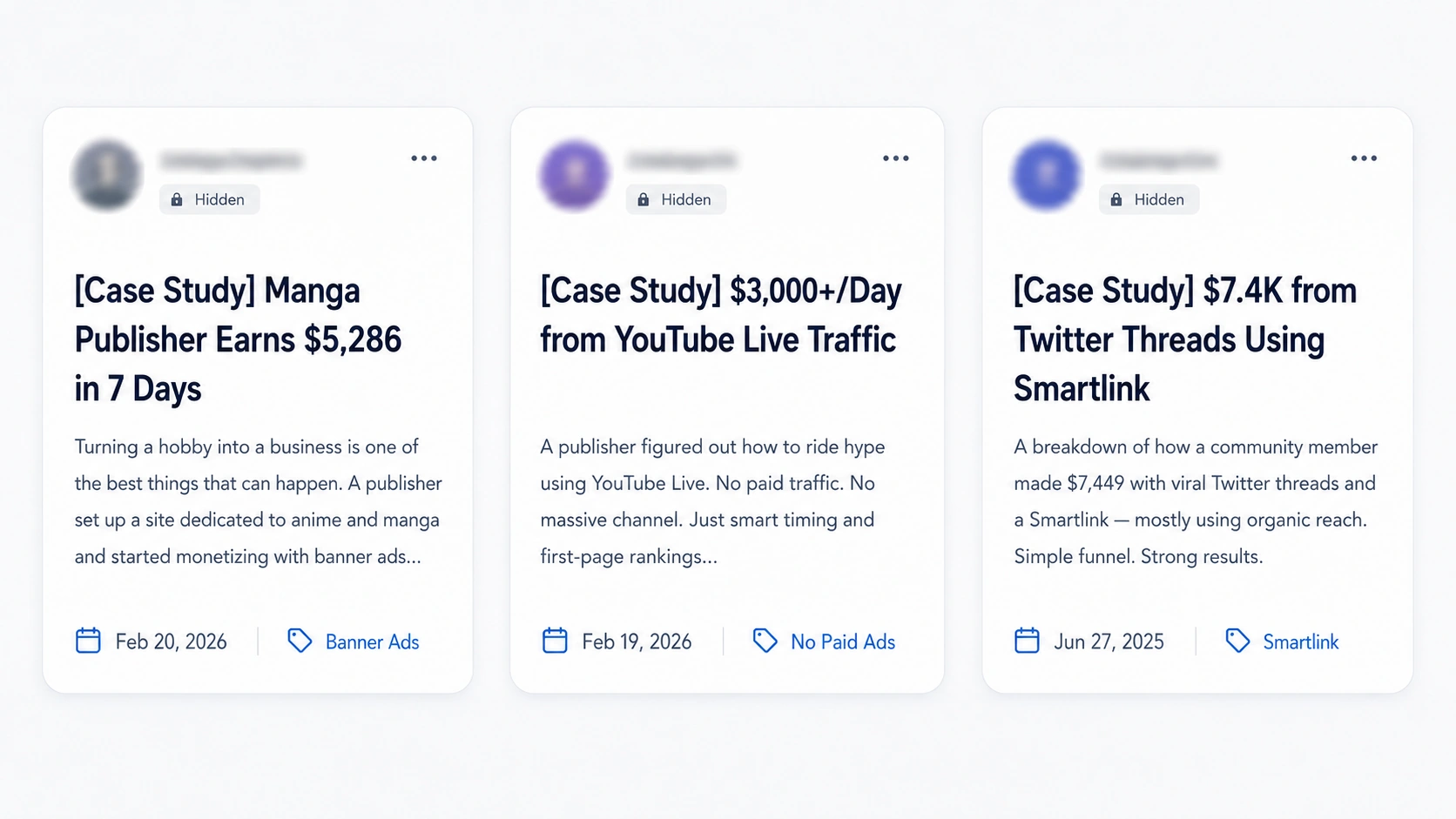
Real case studies. Real traffic angles. Real discussions from affiliates testing what actually works.
See What Real Affiliates Are Discussing